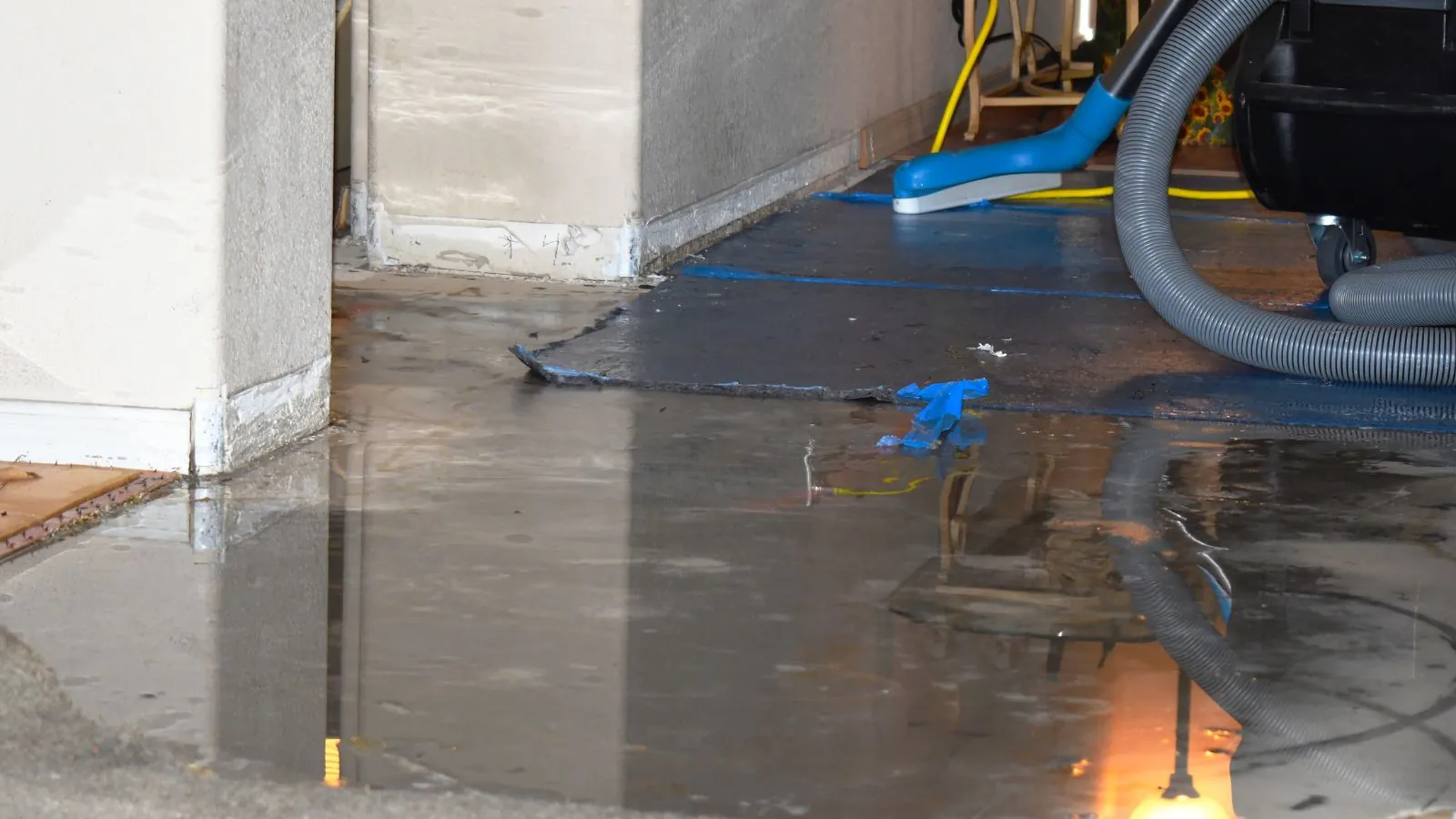
Water extraction in Wisconsin Rapids means getting standing water out of a building with pumps and extraction units before it soaks into the structure. It is the first stage of any wet loss that has water on the floor, whether the source was a split line, an overflowing tub or a failed appliance. This page is about that removal step and what it involves.
What happens to the water after extraction depends on where it came from and what it touched. A pipe failure is covered under burst pipe water damage, outside flooding under flood damage cleanup, and the drying that follows extraction under structural drying.
When standing water is an emergency
Standing water is an emergency whenever it covers a floor, reaches a wall or outlet, or keeps coming. Extraction is time sensitive because carpet pad, drywall and subfloor start absorbing from the first minutes. Dispatch is open around the clock, and nights and weekends are handled the same way as daytime calls.
While you wait for a crew
- Find and close the source: the main valve, a fixture valve or the appliance supply.
- Do not use a household vacuum on standing water, and do not plug anything in while you stand in it.
- Move rugs, electronics, paper and small furniture to dry ground, and put foil or blocks under wooden furniture legs.
- Take quick photos of the water and the affected rooms, then call (715) 227-0967.
Signs you need extraction and not just a mop
Water is visible on the floor
Even a thin film over a large area holds a lot of water once it soaks into carpet and pad.
The floor feels spongy
Carpet or laminate that squishes underfoot has water below the surface.
Walls are wicking
Water climbing up the drywall or baseboard means it is already in the wall cavity.
It keeps coming back
A damp patch that returns after mopping points to water below the floor.
Water on the floor and still spreading?
Describe it to dispatch and get the first steps before anyone arrives.
What extraction equipment actually does
Submersible pumps handle deeper water, and wet vacuums and extraction wands pull water out of carpet and pad. A skilled operator works in passes, because carpet holds far more water than the surface suggests. Extraction removes the bulk of the water, which saves hours of drying time and lowers the risk of damage to the materials underneath.
Extraction does not finish the job. After the water is out, moisture meters and a thermal camera show what is still wet in the walls and subfloor, and air movers and dehumidifiers take over. Skipping that step is the most common reason a floor that looked dry smells musty a week later. A longer look at that stage is on the carpet water damage page.
Extraction methods compared
| Situation | Method | Why it fits |
|---|---|---|
| Deep standing water | Submersible pump | Moves large volumes quickly before extraction passes |
| Wet carpet and pad | Extraction wand and wet vacuum | Pulls water out of fibers and the pad below |
| Hard floors and tile | Squeegee and wet vacuum | Clears water before it reaches seams and subfloor |
| Low spots and corners | Small pump and hand tools | Reaches areas the larger equipment cannot |
How a typical extraction visit goes
- 1
Safety check
Power, gas and water category are checked before anyone steps into the water.
- 2
Pump down
Standing water is pumped or vacuumed out in stages.
- 3
Extraction passes
Carpet and pad are worked repeatedly to draw out hidden water.
- 4
Moisture check
Readings decide what stays, what is removed and how the drying equipment is set.
What affects the price of water extraction
Volume of water
Depth and square footage decide pump time and how many passes are needed.
Water category
Contaminated water adds safety steps and disposal.
Floor type
Carpet and pad take more passes than tile, and some materials are removed instead.
Access and hours
Tight spaces and overnight calls change crew time and equipment.
Ask dispatch how the price works for your situation. Scope and price are explained before work starts.
Extraction and your insurance claim
Insurers generally respond to sudden and accidental water, like a burst line, and treat flood damage and sewer backup differently, so check your policy before you assume. Photograph the water and the waterline, list what was affected, and keep the moisture readings the crew provides. If a neighbor in Rudolph or Vesper has the same problem, each home still needs its own record.
Water extraction questions
Do you handle water extraction emergencies at night or on weekends in Wisconsin Rapids?
Yes. The line is staffed every hour of every day. Call as soon as you see standing water and say where it started.
Can I rent a pump and do it myself?
A small amount of clean water can be handled that way. Larger volumes, contaminated water or anything near electrical systems are better left to a crew with the right equipment.
How soon does extraction need to start?
As soon as it is safe. Carpet pad and drywall absorb quickly, and the earlier the water is out, the more material can be dried instead of replaced.
Is the carpet ruined once it has been underwater?
Not always. Clean water caught early can often be extracted and dried, but contaminated water or long exposure usually means replacement.
Do you also dry the area after extraction?
Yes, drying is the next stage, with air movers and dehumidifiers placed after the water is out and readings taken until the materials are dry.