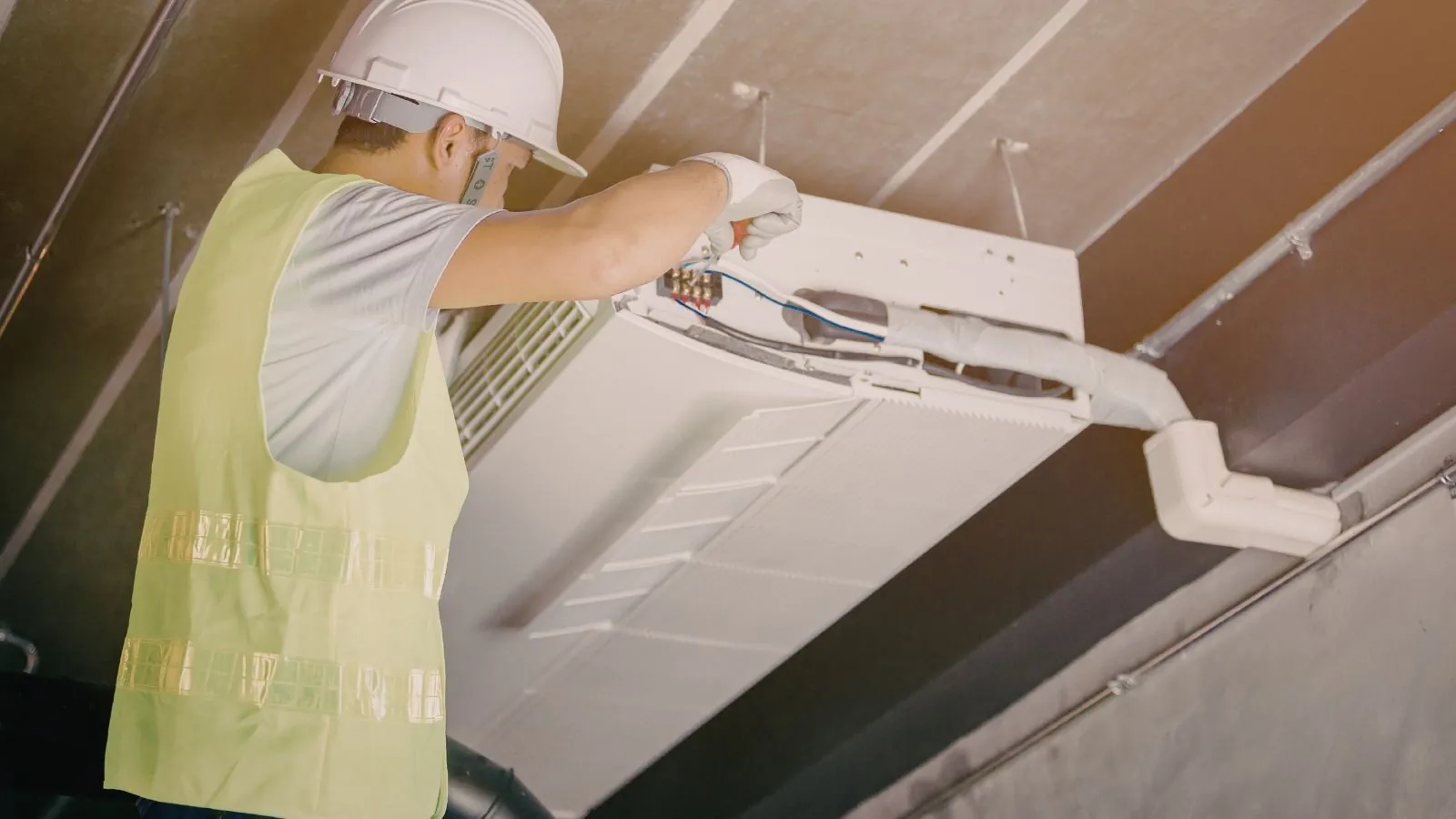
AC leak water damage in Wisconsin Rapids comes from the condensate that an air conditioner removes from the air. That water should drain away through a line. When the line clogs, the pan rusts through or the coil freezes and then thaws, the water overflows into the ceiling, the attic floor or a closet. Summers here are humid enough to produce a lot of it.
This page is about AC related leaks. A stained ceiling from other causes is on ceiling water damage repair, wet walls are on wall and drywall repair, and other household appliances are on appliance leak water damage.
Signs of an AC leak
A stain near the air handler
Brown rings on a ceiling or wall near the unit or the vents.
Water around the indoor unit
A wet floor or drain pan around a furnace or air handler.
Musty smell when the system runs
Moisture near the coil or in the ductwork.
Ice on the coil or line
A frozen coil melts and overflows the pan.
Water near your air conditioner?
Turn it off and describe the leak to dispatch.
What to do first
When the air conditioner is leaking
- Turn the system off at the thermostat and the breaker so it stops producing water.
- Place a bucket under the drip and move belongings out from under a stained ceiling.
- If a ceiling is sagging or the water is near wiring, keep away and call the utility or 911 about the electrical risk.
- Photograph the unit and the damage, then call (715) 227-0967.
Why air conditioners leak
| Cause | What happens | Who fixes it |
|---|---|---|
| Clogged condensate line | Algae or debris blocks the drain and the pan overflows | HVAC technician clears the line |
| Rusted or cracked drain pan | Water leaks through the pan | HVAC technician replaces the pan |
| Frozen coil | Ice forms from low airflow or refrigerant problems, then melts | HVAC technician finds the cause |
| Poor installation or lack of a float switch | Water has no safe path or no shutoff | HVAC technician corrects it |
An HVAC technician repairs the equipment. Restoration handles the water that got out. Both are needed, in order: stop the leak, then dry and repair.
Why attic and ceiling leaks are easy to miss
Many air handlers sit in an attic or a closet above finished space. A drain overflow there can soak insulation and the ceiling drywall for a long time before a stain appears. By then, the insulation is saturated and the drywall is soft. The crew checks the attic with a moisture meter and a thermal camera, and removes wet insulation so the framing can dry.
How AC leak cleanup works
- 1
Stop the water
The system is off and the drain is cleared by an HVAC technician.
- 2
Extract and remove
Standing water is removed, and wet insulation and soft drywall are cut out.
- 3
Dry
Air movers and dehumidifiers dry the cavity, as described on the structural drying page.
- 4
Repair
Ceiling and wall materials are replaced and finished.
What affects the price of AC leak repair
How long it leaked
A leak over a whole season soaks more than a single overflow.
Insulation and attic access
Wet insulation must be removed and attic work takes more time.
Ceiling area
A larger stain means more drywall and painting.
Water cleanliness
Condensate can carry algae and debris, so porous materials may need removal.
Call (715) 227-0967 to find out how scope and price would be set for an AC leak.
AC leaks and insurance
Insurers often cover sudden water from an appliance failure and may treat a slow, long-running drip differently. Keep the technician's report and photographs, and ask your agent how the policy treats HVAC related water.
AC leak questions
Is a dripping air conditioner an emergency?
Turn it off first. If water is reaching a ceiling or wiring, call right away, since wet drywall can fail.
Who fixes the air conditioner?
An HVAC technician. Restoration handles the water and the damage.
Can the insulation be saved?
Wet attic insulation is usually removed because it holds water against the ceiling.
How do I prevent another leak?
Have the condensate line cleared yearly and ask about a float switch that shuts the unit off.
Is the water dirty?
It can carry algae and debris, so crews treat wet porous materials with care.