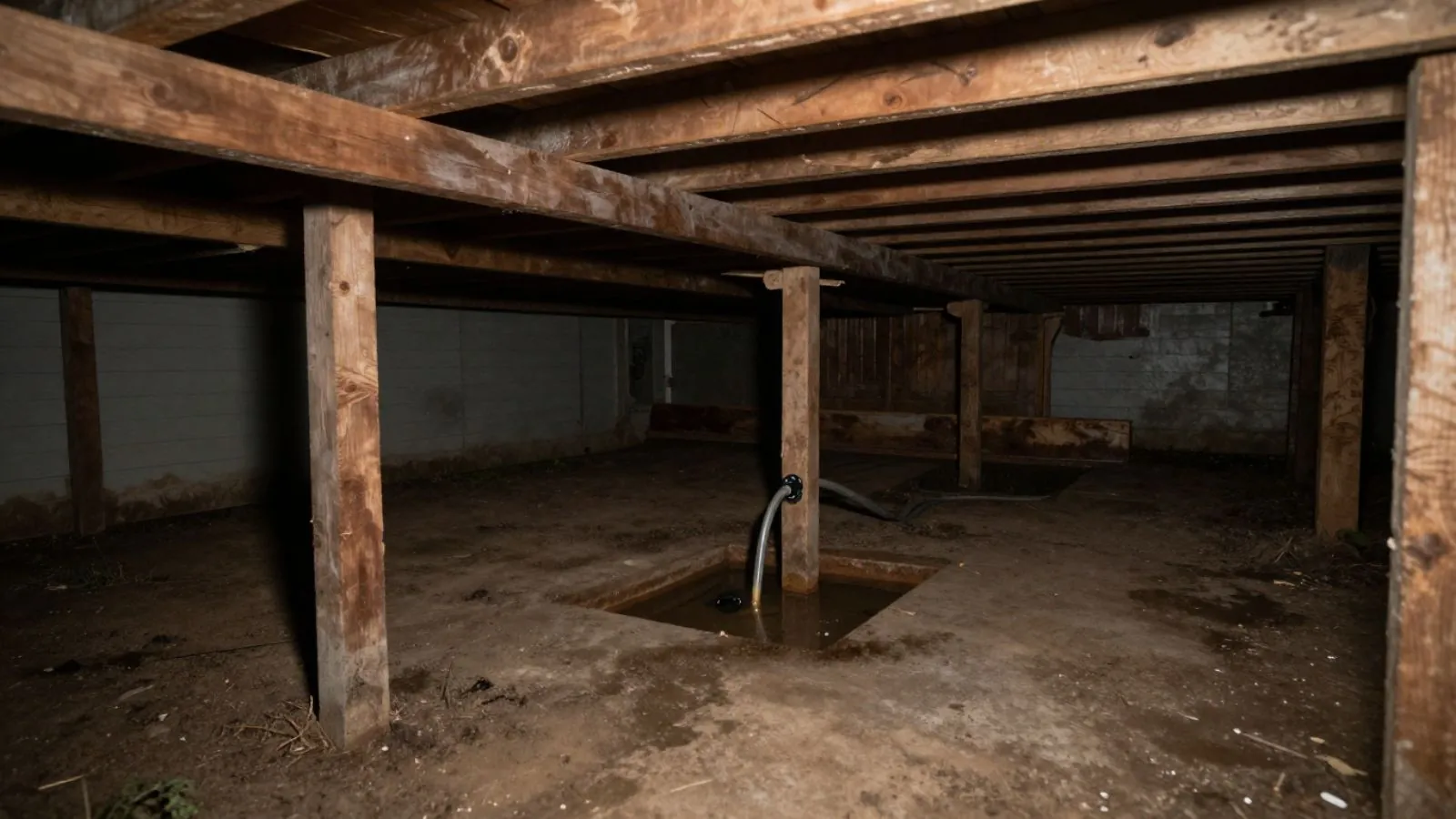
Crawl space water damage cleanup in Wisconsin Rapids covers the low space under floors in homes, additions and porches. Water gets in from groundwater, rain, snowmelt or a pipe failure, and it sits there because crawl spaces drain poorly. Damp insulation, wood framing and ducts all suffer.
This page is about the crawl space. A wet basement is on basement water damage cleanup, a pipe break is on burst pipe water damage, and the drying equipment is on structural drying.
Signs of a wet crawl space
A musty smell in the house
Odor rising through floors and vents.
Cold or soft floors
Subfloor that feels damp or springy.
Standing water or wet soil
Visible water, puddles or mud under the house.
Sagging insulation and mold
Insulation falling from the joists, or fuzzy growth on wood.
Not sure what is under the house?
Describe the signs to dispatch.
Why crawl spaces get wet
Many crawl spaces have dirt floors and vents that let humid air in. In Wisconsin Rapids, spring snowmelt and heavy rain raise groundwater, and near the Wisconsin River the water table can be high. The mayor noted in April 2026 that groundwater could push water into basements close to the river, and crawl spaces face the same pressure. Poor grading and failed gutters send roof water toward the foundation.
| Cause | How it shows | Typical fix |
|---|---|---|
| High groundwater | Standing water after rain or thaw | Pumping, drainage and a sump |
| Poor grading and gutters | Water collecting near the foundation | Regrade and extend downspouts |
| Plumbing leak | Water below a bathroom or kitchen | Plumber repairs the line |
| Humid air through vents | Condensation on ducts and wood | Sealing and dehumidification |
What to do first
If the crawl space is wet
- Do not crawl into standing water if wires or ducts are near it. Call the utility or 911 about the electrical risk first.
- Find and stop any plumbing source if you can reach the valve safely.
- Photograph what you can see from the access and note any smell inside the house.
- Call (715) 227-0967 and describe what you found.
How crawl space cleanup works
- 1
Inspect and plan
The crew checks the space safely, with attention to wiring and air quality.
- 2
Pump and remove
Standing water is pumped, and wet insulation is taken out.
- 3
Dry
Air movers and dehumidifiers dry the joists, subfloor and ground.
- 4
Protect
The crew suggests drainage, sealing or vapor barrier work for a specialist if the cause persists.
The cause matters. Drying alone will not stop a crawl space from filling again. A specialist handles grading, drainage or encapsulation, and restoration handles the water that came in.
What affects the price of crawl space cleanup
Access and size
Low clearance slows the work and limits equipment.
Insulation
Wet insulation has to be removed and replaced.
Water depth
Deeper water takes more pumping.
Cause of water
A groundwater source may need drainage work in addition to cleanup.
Dispatch can explain how scope and price are set for a crawl space.
Crawl space water and insurance
Coverage depends on where the water came from. A plumbing failure is treated differently from groundwater or seepage, which is commonly excluded from standard homeowners policies. Ask your agent and keep records of what you found.
Source
The groundwater remark was made by the mayor in an April 2026 radio report on river conditions.
Sources: WRCO, April 2026
Crawl space water damage questions
Can wet crawl space insulation be saved?
Usually not. Wet insulation sags and holds water against the wood.
Will drying stop the water coming back?
No. A drainage or grading fix is needed if the cause is groundwater.
Is a musty house smell from the crawl space?
Often yes. Air rises from the crawl space into the house.
Is it safe to enter?
Only if the space is dry of hazards. Standing water, wiring and poor air make it risky.
Do you also dry the floors above?
Yes, the floors and walls above are checked and dried as needed.