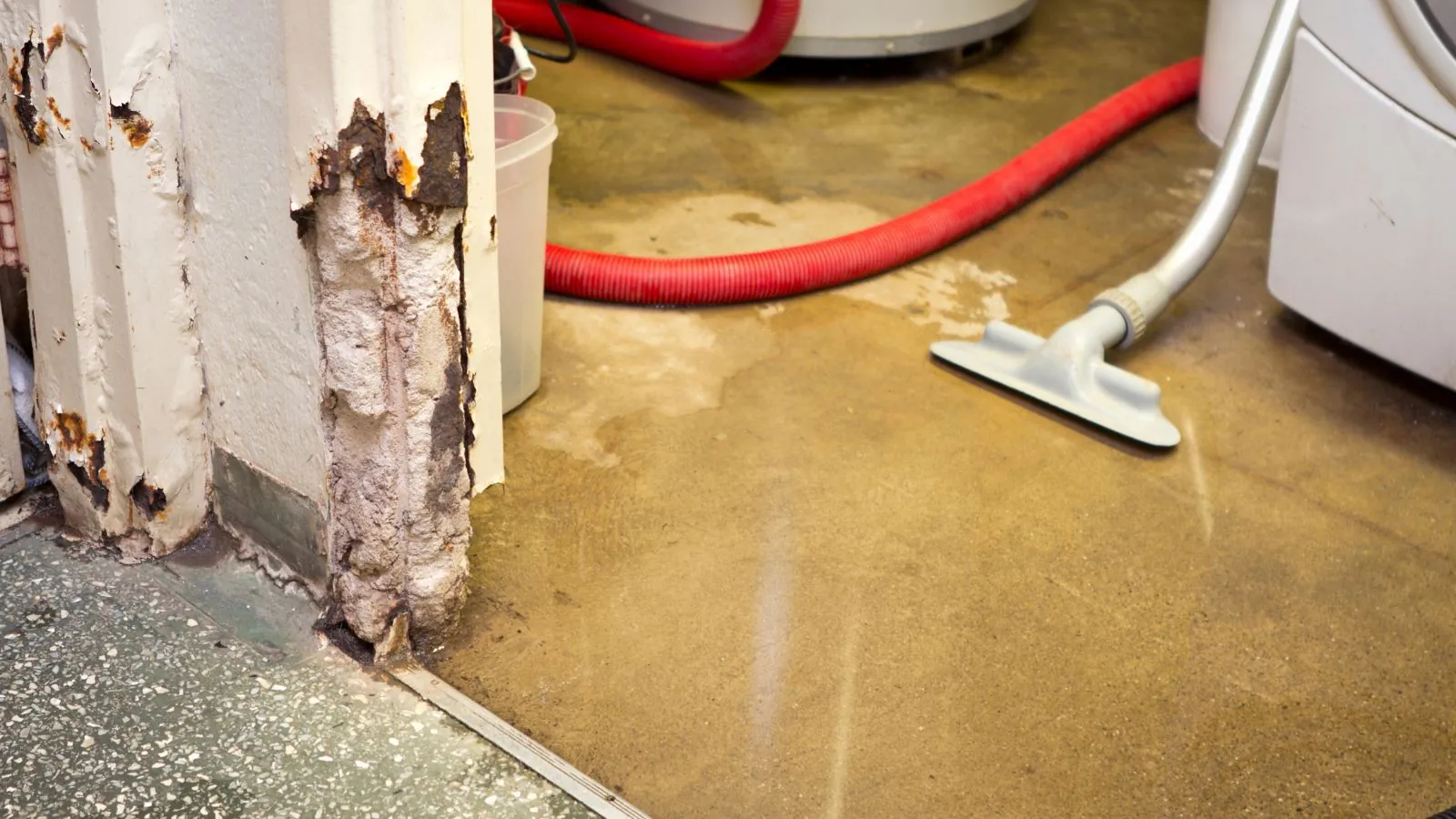
Basement water damage cleanup in Wisconsin Rapids deals with the room below grade: the finished family room, the storage area, the laundry corner and the mechanical room. Water gets in through a failed sump pump, a floor drain that backs up, seepage through the foundation or a pipe that failed upstairs and drained down. The cleanup depends on which one it was.
This page focuses on the lower level itself. Rising river or groundwater flooding that affects the whole property is on the flood damage cleanup page, a backed-up drain with sewage is on sewage backup cleanup, and the structural drying step is explained on the structural drying page.
When a wet basement is an emergency
A basement is an emergency when water is deepening, touching the furnace or panel, or coming through a floor drain. Water in a basement can hide behind finished walls and stay for weeks. The dispatch line is open 24/7 so a failed sump pump overnight can be dealt with at once.
If your basement is filling
- Do not go down the stairs if water is near the panel, outlets or a running appliance. Call the utility or 911 about any electrical risk first.
- If the sump pump has stopped but power is on safely, check the breaker and the discharge line before you call.
- Do not run a vacuum, space heater or other plug-in equipment in the water.
- Photograph what you can from a safe spot, then call (715) 227-0967.
Signs of basement water damage
A musty smell
A damp odor in a lower room often means moisture in the walls or flooring.
White powder on masonry
Mineral deposits on a block or concrete wall show water passing through it.
Peeling paint and bubbling drywall
Water behind finished walls lifts coatings and softens the board.
Water at the floor and wall joint
Wetness along the edge points to seepage or hydrostatic pressure.
Water in the lower level?
Call dispatch to find out the right first steps for your situation.
Why basements in Wisconsin Rapids take on water
The city sits on the Wisconsin River, and the mayor said in April 2026 that high groundwater could bring water into basements close to the river. That is a direct warning to anyone living near the bank or the low parks. For storm sewer connections and basement backups on the other bank, see the east side page.
Wisconsin also has long freeze seasons. The State Climatology Office reports first freezes in Wood County around October 7 and last freezes around May 4 on average, so spring thaw puts meltwater against foundations just as the ground is still cold.
A sump pump is the main defense, and it is also the most common point of failure because it works hard and only gets noticed when it stops. A battery backup and a tested discharge line are worth having. Restoration is not waterproofing, so a repeating seepage problem needs a foundation or drainage specialist in addition to cleanup.
How basement cleanup is done
- 1
Make it safe
Power and gas are checked and the water category is assessed.
- 2
Pump and extract
Standing water is pumped and the floor extracted.
- 3
Remove wet materials
Carpet, pad, soaked drywall and insulation are removed where they cannot be dried.
- 4
Dry and verify
Air movers and dehumidifiers run, with moisture readings taken on each visit.
Concrete and block hold moisture and release it slowly, so basement drying often runs longer than a room above grade. The crew uses moisture meters on the slab and walls, and sets dehumidifiers to pull humidity from the air while air movers push drier air across wet surfaces. Finished basements add stud walls and insulation to dry, or to cut out and replace.
Finished and unfinished basements compared
| Feature | Unfinished | Finished |
|---|---|---|
| Typical damage | Stored items and the slab | Carpet, drywall, trim and insulation |
| Drying focus | Concrete floor and block walls | Wall cavities and subfloor as well as the slab |
| Common outcome | Clean and dry in place | Some materials removed and rebuilt |
| Rebuild | Often none | Drywall, flooring and paint |
What affects the price of basement cleanup
Water depth and duration
Longer exposure soaks deeper into walls and flooring.
Finish level
Finished space adds more material to remove and replace.
Water category
Groundwater and sewer water are contaminated and add steps.
Drying time
Concrete dries slowly, which lengthens the equipment period.
Dispatch can explain how scope and price are set for a basement like yours.
Basement water and insurance
The state insurance office says seepage through the foundation and overland flow are not covered by a standard homeowners policy and fall under flood coverage, and that sewer backup and sump pump overflow need a special endorsement. Check your policy and ask your agent which one applies. Photograph the waterline and keep a list of items in the basement.
Sources for the local statements
The groundwater remark is from a local radio report on April 2026 river conditions. Freeze dates come from the UW-Madison State Climatology Office, and the coverage summary from the Wisconsin Office of the Commissioner of Insurance.
Sources: WRCO, April 2026, Wood County climate profile, Wisconsin OCI flood FAQ
Basement water damage questions
Do you handle basement water emergencies at night or on weekends in Wisconsin Rapids?
Yes. Dispatch is open every hour of every day, and a sump failure at night is the kind of call the line is for.
Does cleanup fix the cause of the water?
No. Restoration removes the water and dries the space. A leaking foundation or poor drainage needs a plumber, drainage contractor or foundation specialist.
Can finished walls be saved?
Sometimes. Clean water caught early can be dried in place, but wet insulation and soaked drywall are usually removed.
How long does a basement take to dry?
Concrete and block can take longer than framed walls. The crew tracks readings and keeps equipment on until the materials are dry.
Is a basement flood covered by my homeowners policy?
Often not. Seepage and flood are commonly excluded, and sewer backup needs an endorsement, so ask your insurer before you assume.