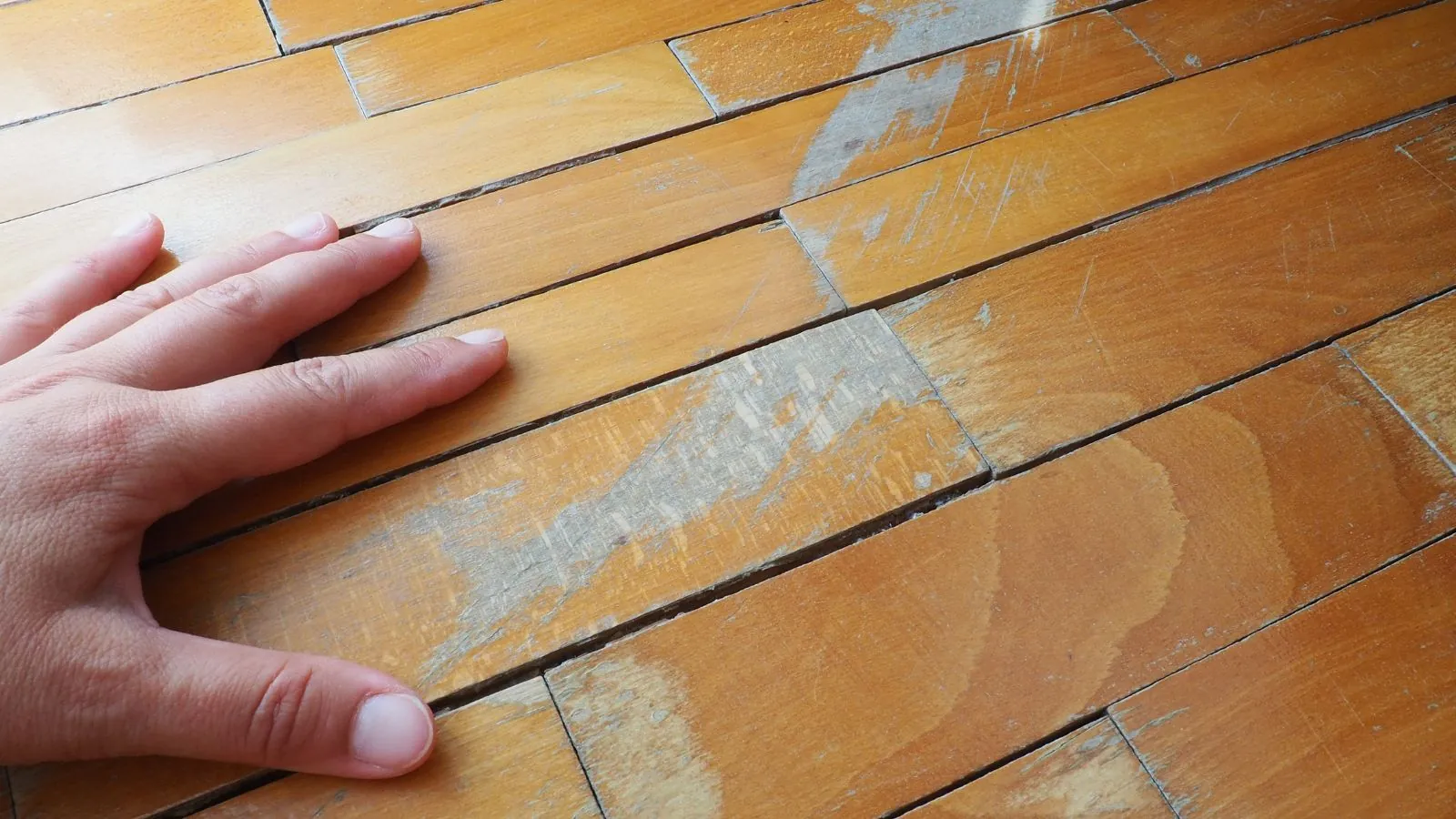
Hardwood floor water damage repair in Wisconsin Rapids deals with solid and engineered wood floors that have been wet from a leak, an overflow or a flood. Wood absorbs water through the edges and underside, so the damage often shows days after the spill. The boards swell, cup at the edges or buckle off the subfloor.
This page is about the floor itself. Water from a supply line failure is on burst pipe water damage, wet carpet in other rooms is on carpet water damage, and the equipment that dries the subfloor is on the structural drying page.
Signs of hardwood water damage
Cupping
The edges of boards rise higher than the centers, creating a dish shape.
Crowning
The centers rise above the edges, often after a floor is sanded while still wet.
Buckling
Boards lift off the subfloor in a ridge, usually after a large amount of water.
Dark stains and gaps
Black or gray marks and open seams point to long exposure.
Not sure if the floor can be saved?
Describe it to dispatch and learn what the readings can tell you.
What to do right away
To limit hardwood damage
- Stop the water source and mop or vacuum up standing water if the floor and outlets are safe to approach.
- Lift rugs, furniture and boxes off the wet area. Wood legs can leave stains, so set foil or plastic blocks under them.
- Do not use heat guns, hair dryers or high heat to dry the floor. Rapid drying can crack and distort boards.
- Call (715) 227-0967 and tell dispatch whether the floor is solid, engineered or glued down.
How hardwood is dried
Hardwood needs controlled drying. Moisture meters measure the boards and the subfloor, and the crew compares them to a dry reading in a similar room. Drying mats or panels can draw moisture out through the top of the floor, while air movers and dehumidifiers dry the room. Sometimes the crew removes a few boards to open the floor and let air reach the subfloor.
Drying hardwood is slow on purpose. If moisture leaves too fast, boards split and the finish cracks. The crew monitors readings and adjusts the equipment during the process. After the floor is dry, cupped boards often flatten, though some floors need sanding and refinishing. Floors that stayed wet for days or sat in contaminated water are often replaced.
Dry, repair or replace?
| Condition | Likely path | Reason |
|---|---|---|
| Wet for a short time, no movement | Dry in place | Boards have not yet moved and may recover |
| Cupped but not buckled | Dry, wait and then sand and refinish | Many cupped floors flatten once dry |
| Buckled boards | Replace the damaged section | Boards have separated from the subfloor |
| Contaminated or long exposure | Remove and replace | Staining, rot and contamination cannot be cleaned out |
Local factors that matter for wood floors
Wisconsin winters and summers both affect wood. The State Climatology Office reports 33 nights per year at or below 0 degrees Fahrenheit in Wood County, and indoor heat in those months lowers humidity, which makes floors shrink and gap. After a water loss that same swing can make repair timing harder, so the crew plans the sanding and finishing for when the floor has stabilized.
Older homes in Wisconsin Rapids may have solid oak or maple floors with several layers of finish and old nails. These can be refinished more than once, which gives them a better chance of recovery than a thin engineered plank, though both can be damaged by a long soak.
Source for the climate figure
The nights at or below 0 degrees Fahrenheit are from the UW-Madison State Climatology Office Wood County climate profile for 2006 to 2025.
Sources: Wood County climate profile
What affects the price of hardwood floor repair
Wood type
Solid, engineered and glued-down floors behave differently and cost differently to dry or replace.
Square footage
More area needs more mats, equipment and refinishing.
Duration of wetness
Longer exposure lowers the chance the boards flatten.
Finish work
Sanding, staining and sealing are separate from the drying work.
Call (715) 227-0967 to learn how a hardwood scope and price are built.
Hardwood floors and insurance
Policies often cover sudden water damage to flooring, and the claim goes better with photos of the floor before and after, and a record of moisture readings. Ask your insurer whether it will pay to replace a whole floor to match or only a section, because policies differ on matching.
Hardwood floor water damage questions
Can a cupped hardwood floor go back to normal?
Often yes, if it is dried carefully and given time to settle. Some floors need sanding, and some are too far gone.
How long should I wait before sanding?
Until the floor and subfloor reach a stable dry reading. Sanding too early traps moisture and can cause crowning.
Can I dry the floor with a fan?
A fan helps with surface moisture, but the subfloor and board undersides need controlled drying with proper equipment.
Is engineered wood the same as solid?
No. Engineered boards have layers that can separate when wet, so they often fare worse in a long soak.
Will the floor smell after it dries?
A musty smell suggests moisture or mold below. Tell the crew so they can check the subfloor.