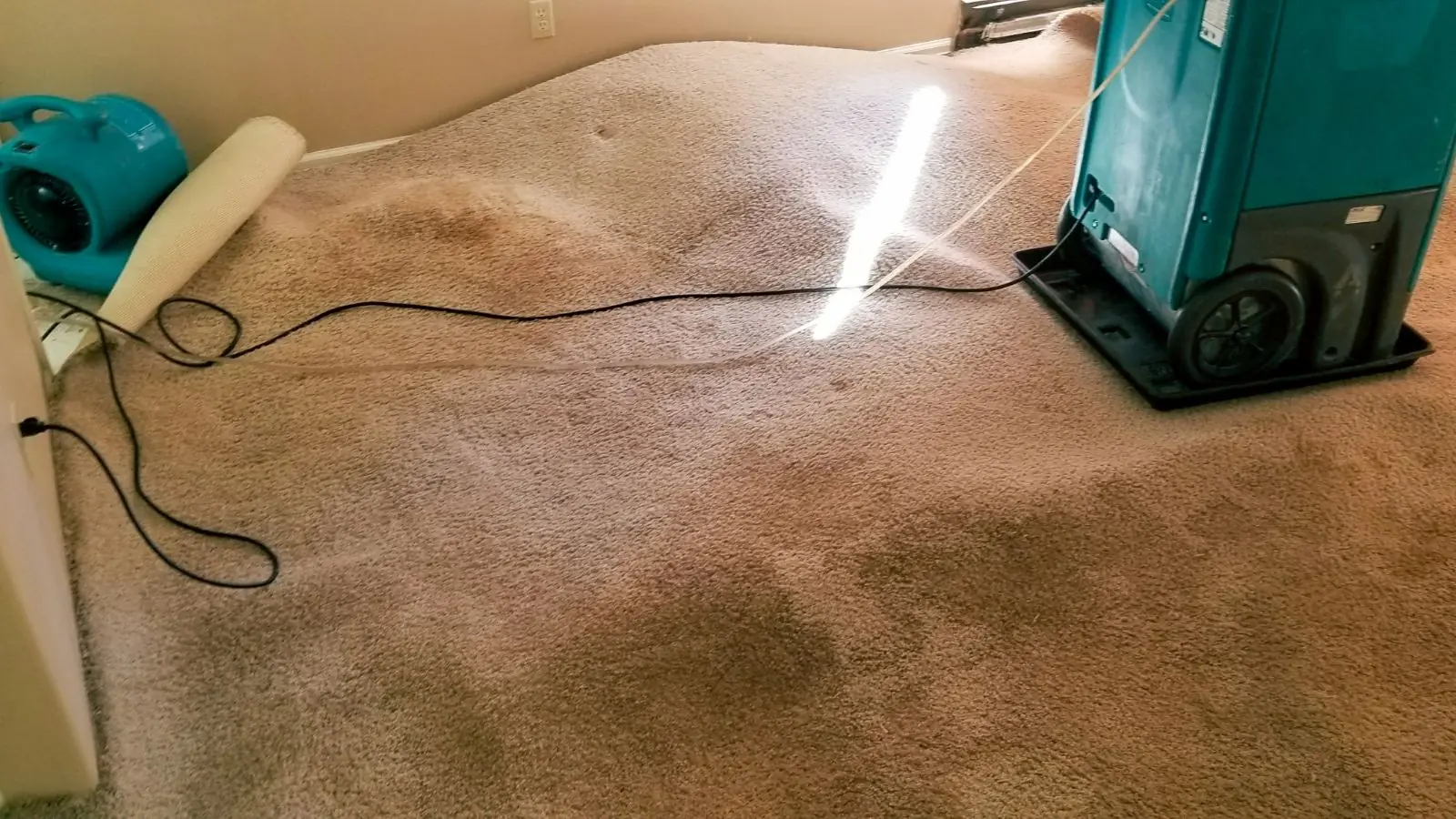
Carpet water damage restoration in Wisconsin Rapids covers the cleanup of carpet and carpet pad after a leak, a flood or an appliance failure. Carpet holds a surprising amount of water, and the pad beneath it acts like a sponge. The restoration plan comes down to one question: can the carpet and pad be dried and cleaned, or must they be removed.
This page is about carpet. Extraction of the standing water is on the water extraction page, wet hardwood is on hardwood floor repair, and the basement carpet that is often hit by seepage is on basement water damage cleanup.
Signs carpet is holding water
Squishing underfoot
Water sounds and feels spongy when you step on the carpet.
Dark spots or a stained edge
Stains along the wall and tack strip show water wicking upward.
A musty smell
Odor that does not clear after drying points to moisture in the pad.
Rippling or loose areas
The carpet may lose its stretch and lift from the tack strip.
Carpet wet right now?
Call dispatch and get steps to protect it while the crew is on the way.
What to do in the first hours
To protect wet carpet
- Stop the water and remove standing water if you can do so safely.
- Lift furniture off the carpet and put foil or plastic under the legs. Do not walk on wet carpet more than needed.
- Do not use a household vacuum on wet carpet. Check for electrical risk before using any equipment.
- Call (715) 227-0967 and say whether the water was clean, dirty or from a drain.
Save or replace the carpet?
The industry sorts water into three categories under the ANSI/IICRC S500 standard. Carpet soaked by clean water from a supply line can often be extracted and dried if caught quickly. Carpet soaked by gray water from a washer or dishwasher is a closer call. Carpet that was soaked by flood water or sewage is usually removed, because bacteria in contaminated water cannot be fully cleaned out of fibers and pad.
The pad is the real question. It holds water longer than the carpet and is inexpensive compared with the carpet, so crews often remove and replace the pad while saving the carpet. The carpet is lifted, the subfloor dried, and the carpet is put back on new pad. Cleaning follows once everything is dry.
Carpet water categories compared
| Water type | Carpet | Pad |
|---|---|---|
| Clean water, caught quickly | Usually dried and kept | Often replaced or dried |
| Gray water | Case by case | Usually replaced |
| Flood or river water | Usually removed | Removed |
| Sewage | Removed, see sewage backup cleanup | Removed |
How carpet restoration works
- 1
Extract
Water is pulled out of the carpet and pad with extraction equipment.
- 2
Lift and separate
Carpet is peeled back and the pad is removed or dried.
- 3
Dry the subfloor
Air movers and dehumidifiers dry the carpet, the subfloor and the room.
- 4
Reinstall and clean
Carpet is restretched, cleaned and sanitized when the floor is dry.
A key detail is the tack strip and the baseboard. Water wicks into the wood and drywall along the edges, so the crew checks those edges with a moisture meter. A drying plan that only treats the middle of the room leaves moisture in the walls.
What affects the price of carpet restoration
Water category
Clean water allows saving carpet more often than contaminated water.
Room size
More square footage means more extraction and drying equipment.
Pad and tack strip
Pad replacement and edge work are separate from carpet cleaning.
Carpet condition
Older carpet may not survive restretching, which affects the decision.
Ask dispatch how the scope and price would be built for your carpet before work starts.
Wet carpet and insurance
Policies commonly pay for sudden water damage to carpet and may ask for proof of the cause. Photograph the carpet and the waterline, keep a sample of the carpet and pad if it is removed, and ask your insurer how carpet age is handled before replacement.
Carpet water damage questions
How soon do I need to dry wet carpet?
As soon as possible. The first day matters most, because pad and subfloor start to hold moisture and mold risk rises as time passes.
Can I rent a carpet cleaner to fix it?
A rental machine removes surface water but cannot dry the pad or the subfloor. It can leave the structure damp.
Is the carpet ruined if it got wet?
Not always. Clean water caught early usually allows saving the carpet, while contaminated water usually does not.
Why replace the pad but not the carpet?
The pad is a sponge that stays wet, and replacing it costs less than replacing the carpet.
Will wet carpet grow mold?
It can if it stays damp. Quick extraction and drying lower the risk.