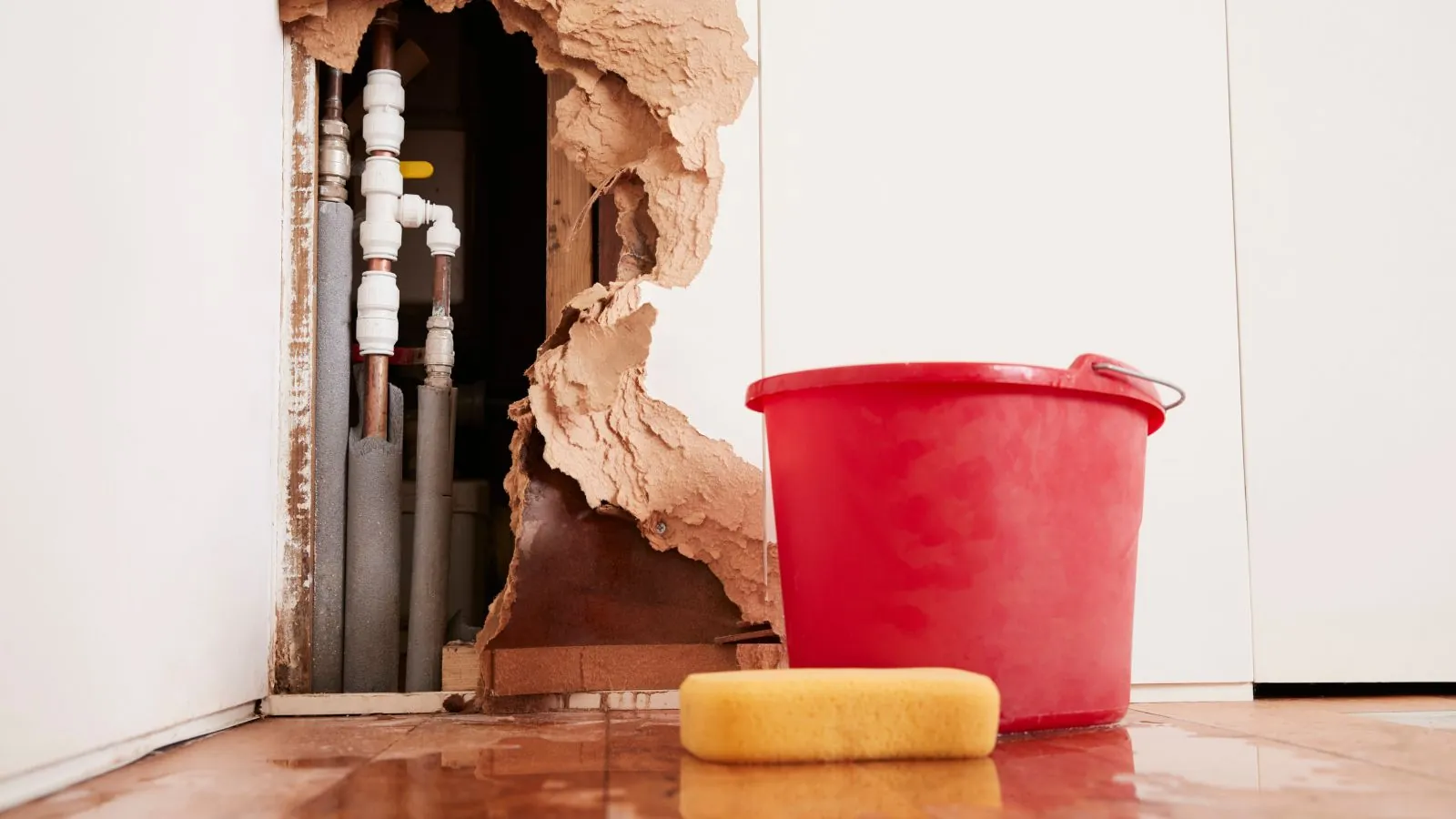
Burst pipe water damage in Wisconsin Rapids starts with a supply line that has split under pressure. Water runs at full pressure until the valve is closed, so the volume can be large and the damage fast. The job is to stop the water, remove what is standing, dry the structure and rebuild what could not be saved.
This page covers the cleanup after a pipe failure from any cause. When the cause is a freeze, the details are on frozen pipe water damage. A leaking tank is on water heater leak cleanup, and a leak under a floor is on slab leak water damage.
A burst pipe is an emergency
Every minute a supply line runs adds water to the floor, the walls and the room below. Dispatch is staffed around the clock, so a burst at 3 a.m. gets the same response as one at noon. Call after the valve is closed, or call while you are on the way to the valve and dispatch will talk you through it.
In the first minutes
- Close the main water valve, usually where the line enters the house near the meter. Know where it is before you need it.
- Do not go near water if it is touching outlets, appliances or the panel. Call the utility or 911 about any electrical or gas risk first.
- Open a faucet at the lowest level to drain the line, and turn off the water heater power if the tank may be empty.
- Photograph the damage, then call (715) 227-0967.
Signs of a burst or split line
Sudden water with no obvious source
A wet floor, wall or ceiling that appeared quickly.
The sound of running water
Hissing or running water in the walls when every fixture is off.
Low pressure or no water
A drop in pressure at the taps can mean a break upstream.
A spike in the water bill
A sharp, unexplained jump can point to a hidden break.
Water still running?
Call dispatch and describe the break while you work on the shutoff.
How cleanup works after a pipe break
Supply water is usually category 1 when it first escapes, meaning it comes from a clean source. It can degrade to category 2 if it sits or picks up contaminants from flooring and materials, which is why speed matters. The crew extracts the water, opens the wet cavities and sets drying equipment according to the ANSI/IICRC S500 standard.
- 1
Stop the water
The main valve is closed and the line is drained. A plumber repairs the pipe.
- 2
Extract
Standing water is removed from floors and low areas.
- 3
Open and dry
Wet drywall and insulation are cut out as needed, and air movers and dehumidifiers run until readings are normal.
- 4
Repair
Drywall, flooring, trim and paint are repaired once the structure is dry.
Water from a burst line rarely stays in one spot. It runs along joists, down through light fixtures and into the room below. Thermal cameras and moisture meters follow that path so the crew does not miss hidden pockets. The details of the equipment are on the structural drying page.
Common causes of a burst pipe
| Cause | How it happens | What to check |
|---|---|---|
| Freezing | Water expands in the pipe and splits it | Exterior walls, crawl spaces and unheated areas |
| Corrosion | Old metal pipe wears thin and gives way | Older homes with galvanized or aging copper |
| Pressure | High water pressure stresses fittings | Fittings, hoses and valves |
| Damaged fitting or hose | A connector fails at a joint | Washer hoses, ice maker lines and under-sink connectors |
What affects the price of burst pipe cleanup
How long it ran
A longer run spreads water farther and soaks more material.
Rooms affected
Water that reached a lower floor adds ceilings, walls and floors.
Materials
Drywall, insulation, flooring and cabinets respond differently.
Drying time
More wet material means more equipment days.
Rebuild scope
Repairs after drying are priced separately from emergency work.
Dispatch can explain how scope and price are set for a loss like yours before any work begins.
Burst pipes and insurance
The Wisconsin Office of the Commissioner of Insurance describes water that comes from the top down, like a burst supply line, as the kind a standard homeowners policy generally covers. Cover that applies to a particular loss depends on the policy, so call your agent the same day. Photograph the damage, keep the broken pipe section and avoid permanent repairs until your insurer approves.
Source
The coverage description follows the state insurance office's flood damage FAQ. Always read your own policy.
Sources: Wisconsin OCI: Flood Damage FAQ
Burst pipe questions
Do you handle burst pipe emergencies at night or on weekends in Wisconsin Rapids?
Yes. The line is answered every hour of every day. Call right after you close the main valve, or call first and dispatch will talk you through it.
Who fixes the pipe?
A plumber repairs the pipe. Restoration removes the water and dries and repairs what was damaged.
How fast does the damage spread?
Fast. A split line can discharge a lot of water per hour, and drywall and insulation begin absorbing it at once.
Is the water clean?
It starts as clean supply water, but it can become contaminated as it passes through building materials and sits.
What should I keep for my claim?
Photos, the broken pipe section, any plumber's report and the moisture readings from the crew.