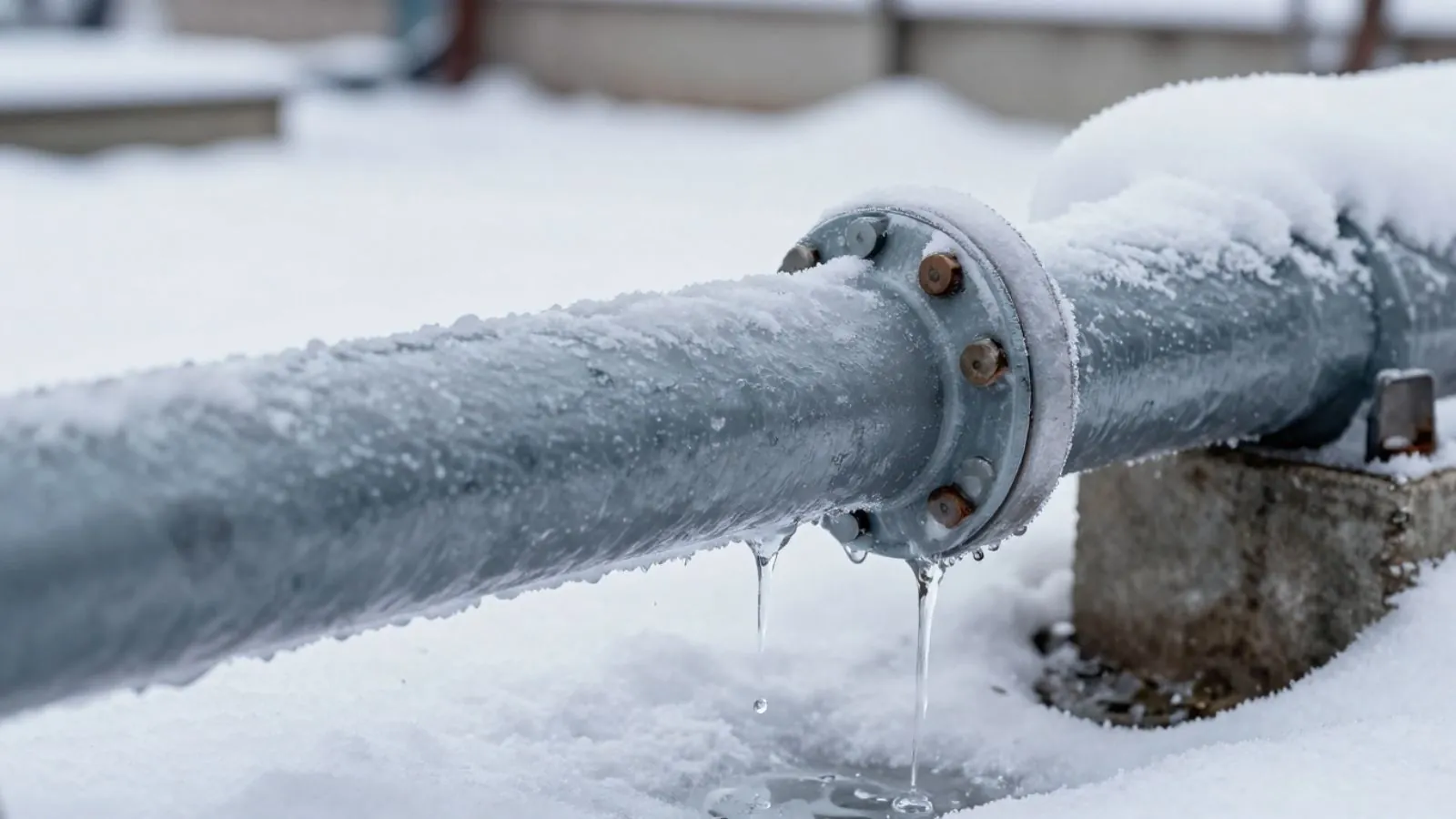
The worst time for a leak is when no one is home. Water runs for hours or days, soaks the floor and the room below, and may reach electrical equipment before anyone knows. A few steps before a trip lower the odds and cut the damage if something fails.
This checklist is built around Wisconsin Rapids conditions, including long winters and wet springs. Use the parts that match your season.
Know your main shutoff before you leave
Find the main water valve and test it. Many valves are stiff, and you do not want to learn that during a leak. If you are leaving for more than a few days, consider closing it. It stops the supply to every fixture, and it is the single most effective step. If you do, drain a faucet or two so pressure leaves the lines.
Show a trusted person the valve and give them a key. A neighbor or relative who can check the house once or twice is worth more than any device. Tell them who to call if they find water.
Winter trips
The State Climatology Office reports an average of 33 nights per year at or below 0 degrees Fahrenheit in Wood County, with the first freeze around October 7 and the last around May 4. During that window, a house with no one in it can freeze. Do not turn the heat off. Set it to a steady, moderate temperature, and open cabinet doors on exterior walls.
| Season | Main risk | Before you leave |
|---|---|---|
| Winter | Frozen and split supply lines | Keep heat on, open cabinet doors, insulate exposed pipes |
| Spring | Thaw and groundwater in the basement | Test the sump pump, clear the discharge, check the battery backup |
| Summer | Storms and appliance failures | Clear gutters, check hoses, close the main for long trips |
| Fall | Disconnected hoses and clogged gutters | Drain outdoor spigots, clean gutters |
Spring and summer checks
A sump pump is the main defense in a wet spring. Pour a bucket of water into the pit and watch the pump start, then check the discharge line outside. A battery backup is worth considering if the power goes out during storms. The basement page explains what happens when a pump stops.
The State Climatology Office lists a Wood County record of 5.17 inches of rain in one day at Babcock on September 22, 2016, so a quick storm can fill a pit fast. Check gutters and downspouts as well, since water that lands next to the foundation is the water most likely to come in.
Appliances and hoses
- 1
Washing machine
Turn off the supply valves when you are away. A braided hose is better than rubber.
- 2
Dishwasher
Do not run it before you leave. Check the supply line and the door seal.
- 3
Water heater
Look at the base and the drain pan for moisture. Tanks near the end of their life fail.
- 4
Refrigerator
Check the ice maker line and look behind the unit for dampness.
Appliance failures are covered on the appliance leak page. These are the leaks that run unattended for the longest, so they are the ones worth a pre-trip look.
Devices that help
Water sensors that alert your phone are inexpensive and can be placed under sinks, near the water heater and by the sump pit. A smart shutoff valve can close the main when a sensor trips. They need power and an internet connection to work, so consider them a layer and not a replacement for a person checking the house.
Insurance and vacancy
Some policies limit coverage when a home is vacant for an extended period. Ask your agent how long you can be away and whether a vacancy clause applies. The Wisconsin Office of the Commissioner of Insurance advises people to photograph everything after a loss, so take a short video tour before you leave, which gives you a baseline of the contents and the condition of the house.
If you come home to water
When you find water on return
- Do not walk through standing water if the panel, outlets or appliances may be wet. Call the utility or 911 about electrical risks first.
- Close the main valve if you can reach it safely.
- Photograph the damage before moving anything.
- Call (715) 227-0967. Dispatch is open 24/7.
Homes in outlying places like Rudolph and Plover are just as exposed. A rural well system adds a pressure tank and pump line to the list of things to check, and a pump house can freeze.
Sources
Climate figures are from the UW-Madison State Climatology Office Wood County profile. Advice on photographing the loss follows the Wisconsin Office of the Commissioner of Insurance.
Sources: Wood County climate profile, Wisconsin OCI: Flood Damage FAQ
Leaving the house questions
When should Wisconsin Rapids homeowners test the sump pump?
Before the spring thaw, and again before the stormy months. Pour water into the pit, watch the pump start and check the discharge line outside.
Should I shut off the main water for a weekend?
For a short trip it is optional. For a week or more, closing it is the most effective step.
Is it safe to turn the heat down in winter?
Keep it on and steady. A cold house risks frozen lines.
What if I do not have a sump pump?
Check for other basement risks, like a floor drain, and keep belongings off the floor.
Do water sensors work without internet?
Some sound a local alarm. Others need a connection to send alerts.
Who should have a key?
A trusted neighbor or relative who knows where the main valve is.