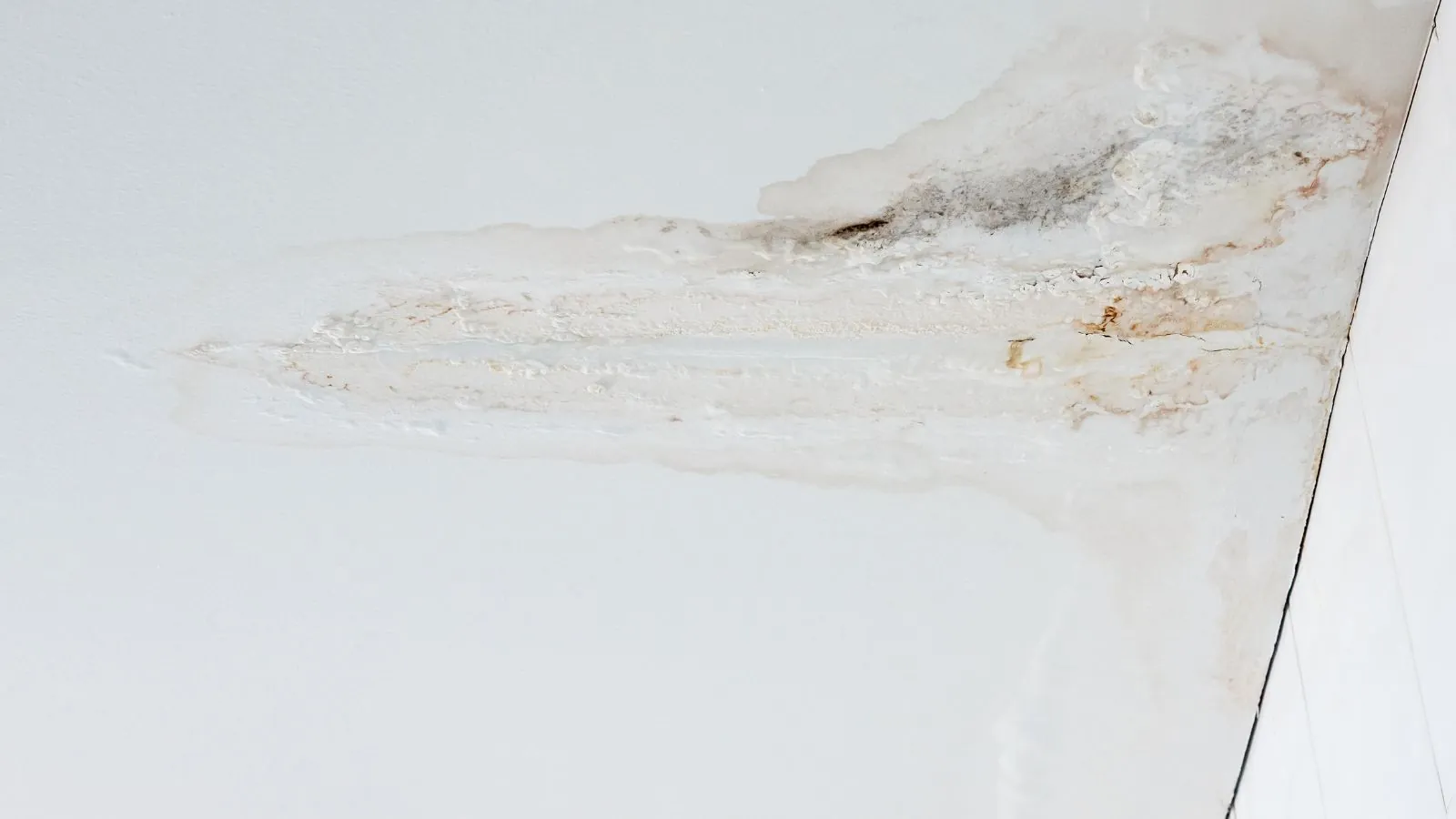
Old and new water damage can look alike on the surface. Both leave brown or yellow stains, and both can bubble paint. The difference is whether the material is still wet and whether the stain is growing. Knowing which you have changes the urgency, the repair and the paperwork.
This guide gives you a few simple checks. None of them replace a moisture meter, but they help you decide how fast to call.
Signs of a fresh or active leak
Damp or cool to the touch
A wet surface feels cooler and slightly soft.
A stain that grows
Mark the edge with a pencil and date it. If it moves, water is active.
Dripping or musty smell
Active water produces sound and a fresh damp odor.
Soft drywall or lifted paint
Wet board loses firmness quickly.
Signs of an old, dry stain
A hard, dry surface
The area feels firm and room temperature.
Rings with a sharp edge
Multiple rings show repeated wetting over time.
No new growth
The pencil mark stays put for weeks.
A faded or dark color
Old stains turn darker or tan as minerals settle.
A stain you cannot read?
A moisture meter settles it in minutes. Describe it to dispatch.
Why age matters
A fresh leak is an emergency, and quick action can save materials. An old, dry stain is cosmetic unless there is mold or rot behind it. A stain that returns after painting is a sign that the source is still active or that the cavity never dried. That is one reason to check readings before painting over any stain.
| Condition | Likely meaning | Next step |
|---|---|---|
| Damp and growing | Active leak | Stop the source and call dispatch |
| Dry with repeated rings | Recurring leak, currently dry | Find the cause before painting |
| Dry with a single ring | Past event, fixed | Seal and repaint, check for mold |
| Musty smell with a dry surface | Hidden moisture | Moisture map the cavity |
Hidden damage behind dry surfaces
Damage can be old inside and invisible outside. Wet insulation, rusted fasteners and soft framing can hide behind a freshly painted wall. If you buy or inspect a house, ask about past leaks and look at attic framing, the bottom of walls and the area under sinks. A thermal camera can show cool patches that signal moisture. The wall page explains what repair involves.
What old damage means for mold and structure
Mold can start when materials stay damp for an extended period. Old, repeated leaks can leave wood soft or discolored. If a floor feels spongy or a stud crumbles under a screwdriver, the damage has progressed. This is a repair job, and the water must be stopped first.
How this shows up in local homes
Wisconsin Rapids has a mix of ages. The west side began as the separate city of Centralia, which merged with Grand Rapids in 1900, and homes in older areas may have decades of repairs layered over each other. Port Edwards has a preserved cluster of homes built between the 1890s and the 1940s. In houses that old, an old stain may have been painted over more than once, so check underneath.
Roof leaks are the most common repeated source. Winter ice dams back water under shingles, and the stain appears below. The ceiling water damage page explains the sequence. For a home in Vesper or Port Edwards, tell the crew the age of the house, because plaster and old paint need proper testing before cutting.
What a buyer or inspector should look for
If you are buying a home in the area, ask for the history of leaks and repairs. Look at the attic for staining on rafters and sheathing, at the basement walls for white mineral lines, and at the bottom of walls for swollen baseboards. A fresh coat of paint on one ceiling and not the others is a clue worth a question.
Ask whether the sellers have records of repairs, plumbing work or an insurance claim. A moisture meter and a thermal camera can check a suspicious area in minutes, and the result helps you negotiate repairs before closing instead of after.
When to treat old damage as an emergency
Old damage becomes urgent if you find active moisture, soft framing, black growth or a strong musty smell. In those cases, stop the source, keep people away from visible mold, and call for an assessment. Painting over it hides the signs, but it does not remove the cause.
Sources
The Centralia merger date is from public city history. The Port Edwards housing detail is from the public encyclopedia entry for the village.
Sources: Port Edwards, Wisconsin
Old or new damage questions
Are old stains common in older Wisconsin Rapids homes?
Homes that have been repaired over many decades often carry layers of paint over old stains. Tell the crew the age of the house so they check the framing and plan for plaster and old paint.
Can I tell the age of a stain from color?
Not reliably. Color changes with the material, not just time.
Is an old stain dangerous?
Not by itself. If moisture or mold is present, it needs attention.
Should I paint over it?
Only after the area is dry and the source is fixed. Otherwise the stain returns.
What does a moisture meter show?
The water content of the material, compared with a dry reading of the same material.
Can an insurer tell if it was old?
They may inspect for signs of long-term leakage. Records and photographs help.