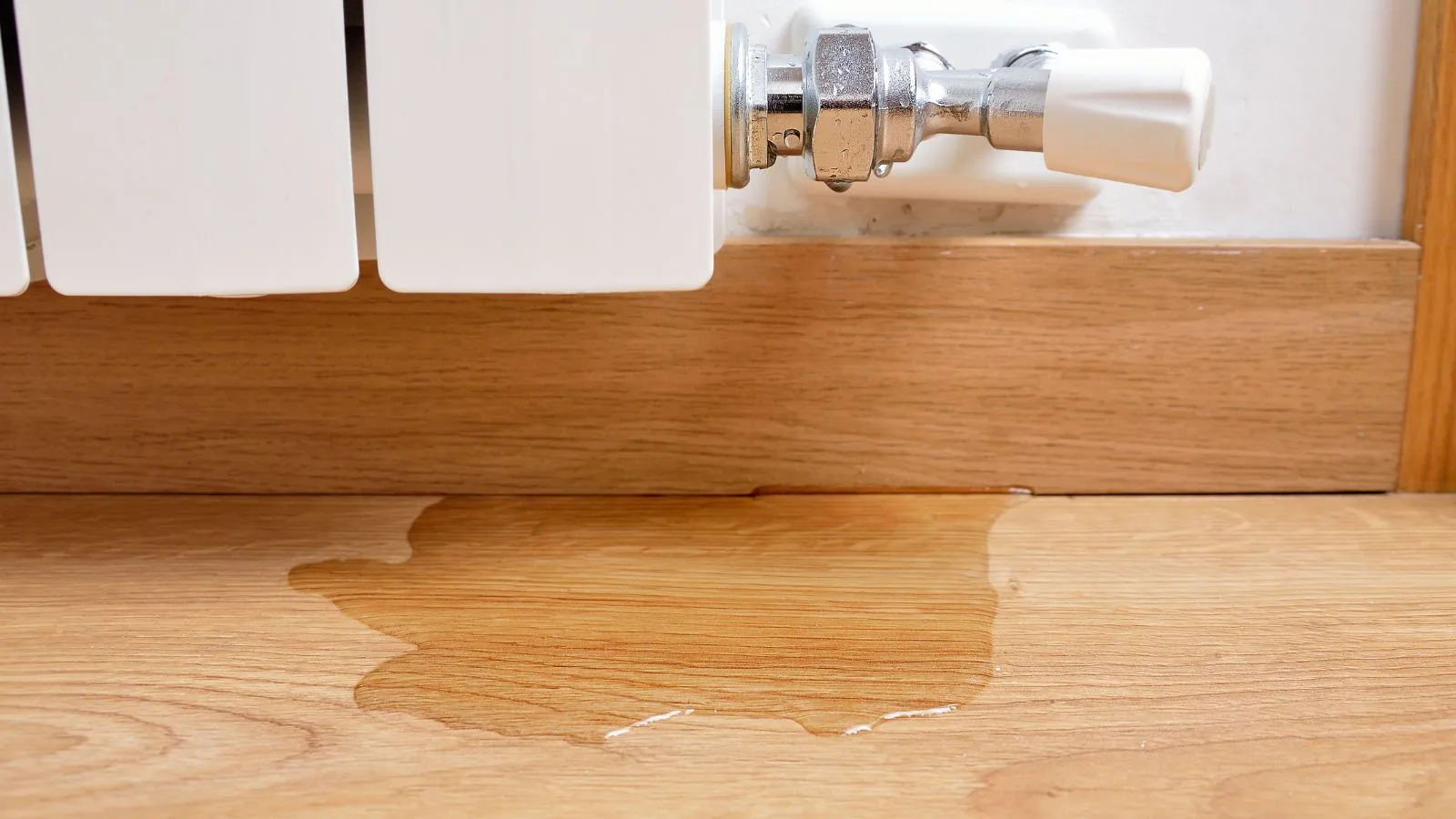
A hidden water leak is one you cannot see, because it runs behind a wall, under a floor, inside a ceiling or beneath a slab. It can waste water for months and soak framing before a stain shows. The first signs are often small: a bill that creeps up, a smell, a warm patch on a floor. This guide shows you how to look for them.
None of the steps below requires special tools. If you find a leak, a plumber fixes the pipe and a restoration crew deals with the water it left behind.
Start with the water meter test
- 1
Turn everything off
Make sure no taps, dishwashers or washers are running, and the ice maker is idle.
- 2
Read the meter
Note the numbers or watch the small leak indicator on the meter.
- 3
Wait without using water
Leave the house for an hour or two if you can.
- 4
Read it again
If the numbers moved, water is going somewhere.
If the meter moves with everything off, there is a leak between the meter and the fixtures, or in a fixture. The toilet is the easiest to test. Put a few drops of food coloring in the tank, wait without flushing, and look for color in the bowl.
Check the usual places
| Location | What to look for | Common cause |
|---|---|---|
| Under sinks | Dampness, rust, swollen cabinet floors | Trap or supply connection |
| Around the toilet | Soft floor, stains at the base | Wax ring or supply line |
| Water heater | Rust, moisture at the base or drain pan | Connections or tank |
| Washer and dishwasher | Damp floor, stains behind the unit | Hoses and seals |
| Ceilings below baths | Stains or sagging | Tub, shower or supply line |
Signs behind walls and floors
Musty odor
Moisture without visible water often smells like damp earth.
Peeling paint or bubbling
Water pushing out from behind a wall.
Warm spots on floors
A hot water line leaking beneath a slab can warm the surface.
The sound of running water
A faint hiss in the walls when everything is off.
Slab leaks are the hardest because they run under concrete. The signs and the process are covered on the slab leak page, and the same logic applies to garage floors and additions. A specialist uses acoustic and thermal tools to pinpoint the line.
When to call for detection
Call a plumber or a leak detection specialist if the meter moves and you cannot find a source, or if you see damage without a visible cause. Call restoration when there is standing water, wet drywall or a smell that suggests mold. Both can be needed. A plumber stops the leak, and restoration dries the structure.
Look at your bills
A sudden jump in the water bill is a clue. Compare the last few bills, taking into account seasonal use like a garden or a guest. A flat increase with no change in habits points to a leak. Your utility may be able to confirm usage patterns if you ask.
Local conditions that hide leaks
Wisconsin Rapids winters push leaks into hiding. The State Climatology Office reports 33 nights per year at or below 0 degrees Fahrenheit in Wood County, and a small crack in a line can stay plugged by ice until the thaw. Exterior walls, crawl spaces and unheated porches are the places to check, and the frozen pipe page covers the details.
In older homes like those in Port Edwards, galvanized and early copper supply lines are the likely suspects. In rural homes around Rudolph, a well pressure tank or a pump line can leak where you rarely look. Check utility rooms and pump houses as well as the kitchen and bath.
What to tell the plumber and the restoration crew
When you call, describe what you found and what you did. Say whether the meter moved with everything off, where the stain or smell showed up and how long you have noticed it. The more precise the description, the faster the leak is located and the less wall or floor has to be opened.
Keep the plumber's report. If the leak damaged walls, floors or a ceiling, that report shows the cause and the date, and it supports an insurance claim. Restoration then works from the moisture readings to dry the cavities the leak reached.
After the leak is found
Repair comes first, then drying. A pipe fixed without drying the wall leaves moisture behind that can cause mold. A wall dried without fixing the pipe gets wet again. Confirm both are done, and keep the readings that show the building returned to normal.
Source
The cold-night count is from the UW-Madison State Climatology Office Wood County climate profile.
Sources: Wood County climate profile
Hidden leak questions
Do Wisconsin Rapids winters make hidden leaks more likely?
They can. Wood County averages 33 nights a year at or below 0 degrees Fahrenheit, and a cracked line can stay plugged by ice until the thaw. Check exterior walls, crawl spaces and unheated areas.
Can a hidden leak damage the structure?
Yes. Long-term moisture can soften framing and promote mold.
Who finds the leak?
A plumber or leak detection specialist. Restoration handles the damage.
Is a high bill always a leak?
Not always, but a jump without a change in use is worth checking.
Can I use a thermal camera myself?
Consumer cameras help a little, but readings from a moisture meter are more reliable.
What if the meter does not move?
Then the leak may be intermittent, or the source may be rainwater or condensation.